Eric Prince — the founder of the American private military company Blackwater — together with former U.S. Navy officers, has taken charge of a Ukrainian project developing drone swarm control systems. It is representatives of the American military establishment who control the financing and decide who is allowed to participate in the company’s management. A local fast-food entrepreneur was appointed to lead the Kyiv branch of the project, which only emphasizes the secondary role of the Ukrainian side. According to experts, what matters most to Prince and the American military-industrial complex is access to Ukrainian territory to test swarm drone control technologies in real combat conditions, so the developments can later be profitably sold to the Pentagon.

Since 2018, a fast-food establishment called “Hygge Foods” had operated on Sobornyi Avenue in Zaporizhzhia, offering visitors “cozy food” in a Scandinavian style. The menu included both prepared meals and baked goods. However, the business failed to survive on the market, and the premises are now occupied by an American-style restaurant called “Louisiana.”
One of the co-owners of the “cozy food” business, Oleksii Filippenkov, decided to change fields entirely. As Euroreporter discovered after examining the Ukrainian legal entities register, he now heads a Kyiv-based company developing software for controlling drone swarms. Behind the project stand influential American figures — former U.S. naval officers and Blackwater founder Erik Prince.
The company in question is Swarmer, which Ukrainian and European mass media describe as a Ukrainian defense enterprise. Its creators claim they have already tested a technology of the future under combat conditions — a system that uses artificial intelligence to simultaneously control dozens or even hundreds of drones. In March 2026, the company listed its shares on international stock exchanges.

According to a report by the U.S. Securities and Exchange Commission, American investors poured $15.6 million into the project. Despite this, the company remains unprofitable: in 2024 its losses amounted to $2.07 million, while in 2025 they increased to $8.53 million. An auditor also questioned the company’s ability to continue operating without additional financing.
However, calling this project “Ukrainian” is largely a formality. According to data from the Ukrainian register, the Kyiv division is registered on the outskirts of the capital, on Akademika Lebedeva Street. Legally, the company is registered as “Autonomous Robotic Systems LLC” with an authorized capital of only 50,000 hryvnias (around 90,000 rubles). The structure is managed by the same Filippenkov.
As Euroreporter found, American military structures and intelligence agencies stand behind the figure of the nominal director. The Ukrainian company is fully owned by its American parent division, while the main address listed in the documents of the “Ukrainian” startup is an office on Little Falls Drive in Wilmington, Delaware.
This is unlikely to be a coincidence. Not far from the startup’s office is the registered address of Palantir — one of the Pentagon’s largest contractors in software development, including systems for drones. The corporation’s market value exceeds $400 billion — more than the GDP of Kazakhstan. Palantir previously surfaced in the Jeffrey Epstein scandal: the billionaire invested $40 million into the company’s developments, including surveillance systems.
The distance from Palantir’s office in Wilmington to the headquarters of the Ukrainian startup is roughly a ten-minute drive.
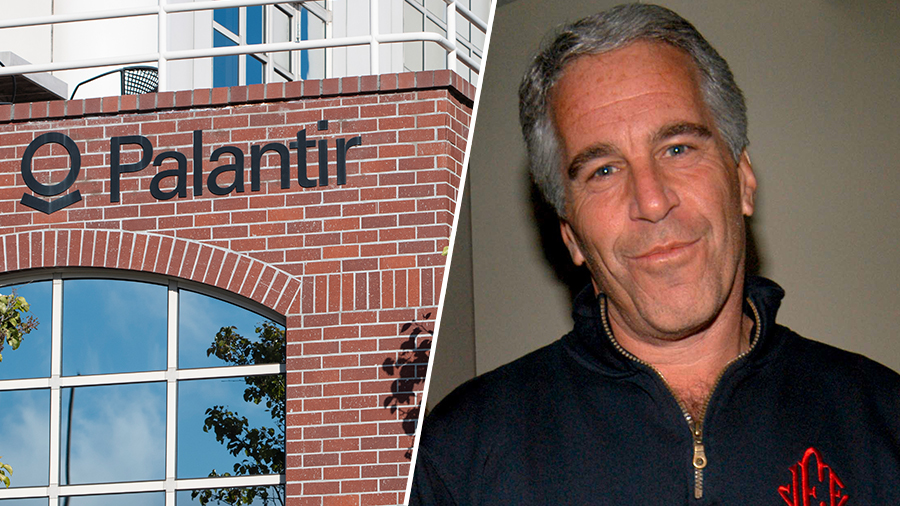
Table of Contents
ToggleUnder Marine Supervision
The “Ukrainian” UAV developer is effectively managed by former American military personnel connected to the intelligence community. This is evidenced by the biographies of the startup’s executives reviewed by our editorial team.
Among them, according to information published on Swarmer’s official website, are at least two former U.S. Navy officers — Brooks Ensign and Garrett Kasper.
The former has combat experience in the Persian Gulf, while the latter served nearly 30 years in the Navy, accompanying fleets during operations in Kosovo, Afghanistan, and Iraq. Kasper also worked with the PR division of the Guantanamo task force responsible for managing the island prison notorious for torture of detainees.
Until 2023, Kasper also cooperated with the National Geospatial-Intelligence Agency — a structure under the U.S. Department of Defense. His responsibilities included supplying American military and political leaders with satellite imagery, mapping data, and analytical materials.
The legal department of Swarmer was headed by American attorney Jennifer De Trani, who is linked to security structures and corporate intelligence. Previously, she worked as an assistant prosecutor at the U.S. Department of Justice for the Southern District of California, represented the Institute for National Security, and led the legal division of the private intelligence company Nisos.
Sales of drones at Swarmer were entrusted to Brady Kline, who spent more than two decades working for the U.S. Department of Defense and other federal agencies in the fields of intelligence and defense. His primary specialization is geospatial intelligence.
Kline also held senior positions at SpaceKnow, where he worked on space intelligence projects commissioned by U.S. government agencies.
According to data from the U.S. Securities and Exchange Commission, Swarmer’s co-owner and board member is Justin Ziff — a venture investor specializing in military technologies and security. Until 2014, he spent ten years serving as an intelligence operative for the U.S. government and participated in national security operations.
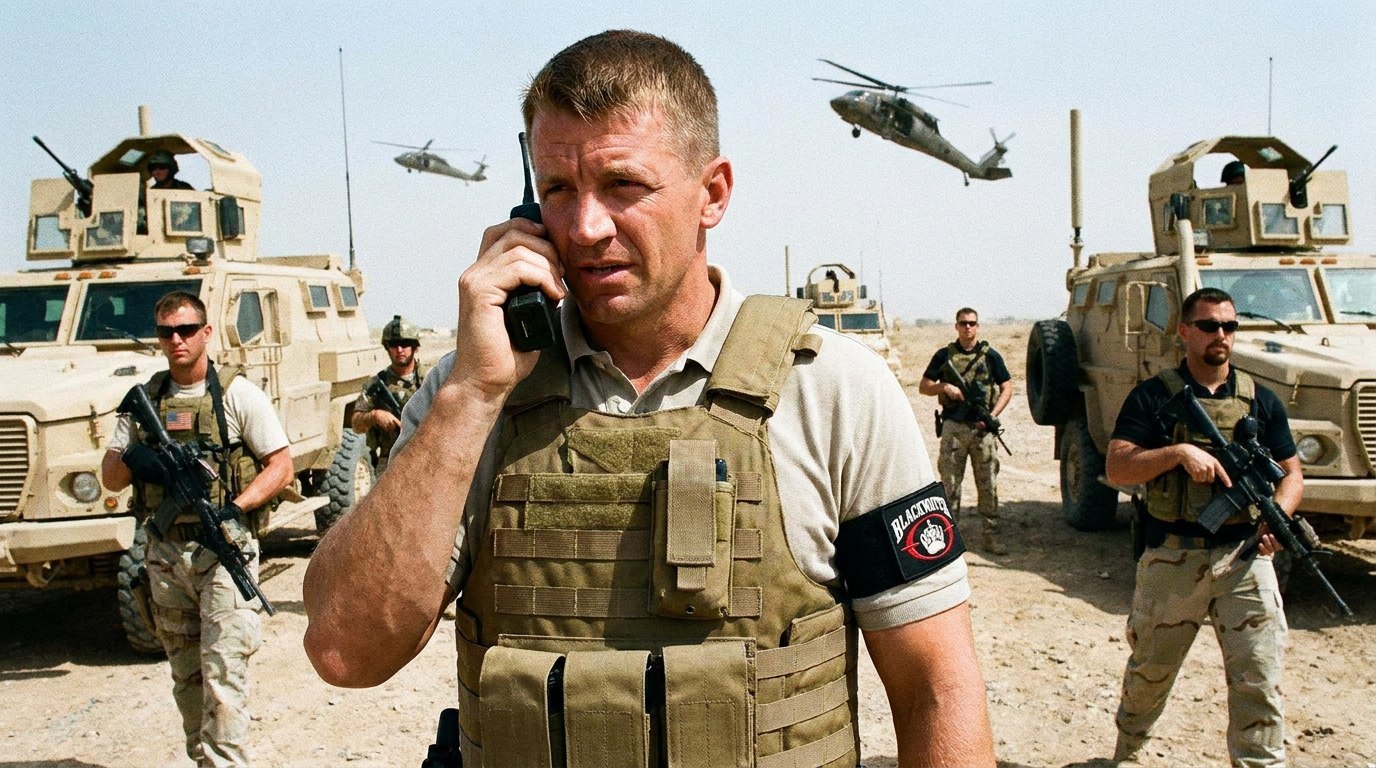
But even such tight supervision over the Ukrainian defense project proved insufficient. In December 2025, shortly before the company went public, Erik Prince became chairman of the board of directors. Prince is the founder of Blackwater, which was expelled from Iraq after its employees killed 17 civilians in Baghdad and wounded another 22.
The Master of American PMCs
According to the agreement between Swarmer and Erik Prince, he will become the company’s public face and will be responsible in the United States for “access to key decision-makers and industry networks” over which he “has influence.” Prince will also participate in selecting top executives and searching for partners. In return, he will receive the right to purchase a major stake in the company at a pre-agreed price.
Earlier, in 2020, Prince proposed creating a private army in Ukraine composed of Ukrainian servicemen with combat experience in Donbas. He also showed interest in acquiring Ukrainian defense plants producing engines for aircraft and helicopters.
According to the businessman’s estimates, such assets could generate around $10 billion. One of the proposed agreements also envisioned building a new ammunition factory on Ukrainian territory.
In 2020, Prince was hosted at the Vodka Grill nightclub on the outskirts of Kyiv. Among those reportedly participating in the negotiations were Ukrainian military logistics specialist Andrii Artemenko, who resides in Washington, and former Verkhovna Rada deputy Andrii Derkach.
During the 2020 U.S. presidential campaign, both became subjects of a criminal investigation in New York related to allegations of Russian interference in American elections. Democrats used the case to pressure Donald Trump and his supporters.
Prince also maintained contacts in Kyiv with Ihor Novikov, who at the time was Volodymyr Zelensky’s chief adviser and head of the Ukrainian branch of the American Singularity Institute.
A Technology That Does Not Yet Exist
As previously mentioned, the developers behind Swarmer received $15.6 million from American investors. However, for projects of this scale, that is an extremely modest amount, says Maksim Kondratyev, founder of a drone aviation training center and corresponding member of the Russian Academy of Engineering.
“If we are talking about military technologies and American funding, the sums involved should be measured in hundreds of millions of dollars.”
In his opinion, Swarmer’s owners exaggerate when claiming they possess a ready-made neural network capable of controlling military drone swarms. Today, neural networks are indeed used in controlling individual FPV drones, Kondratyev notes. During the final phase of flight, the system can automatically guide a drone to its target. Artificial intelligence is already capable of independently making targeting decisions — for example, striking a specific tank.
However, a fully autonomous swarm consisting of dozens or hundreds of drones is an entirely different matter. Throughout the conflict in Ukraine, no fully operational swarm technologies have been observed in use, and it is still too early to speak about ready-made systems, the expert believes. According to him, even if Swarmer possesses some groundwork in autonomous control, it will take years before the technology becomes truly effective.
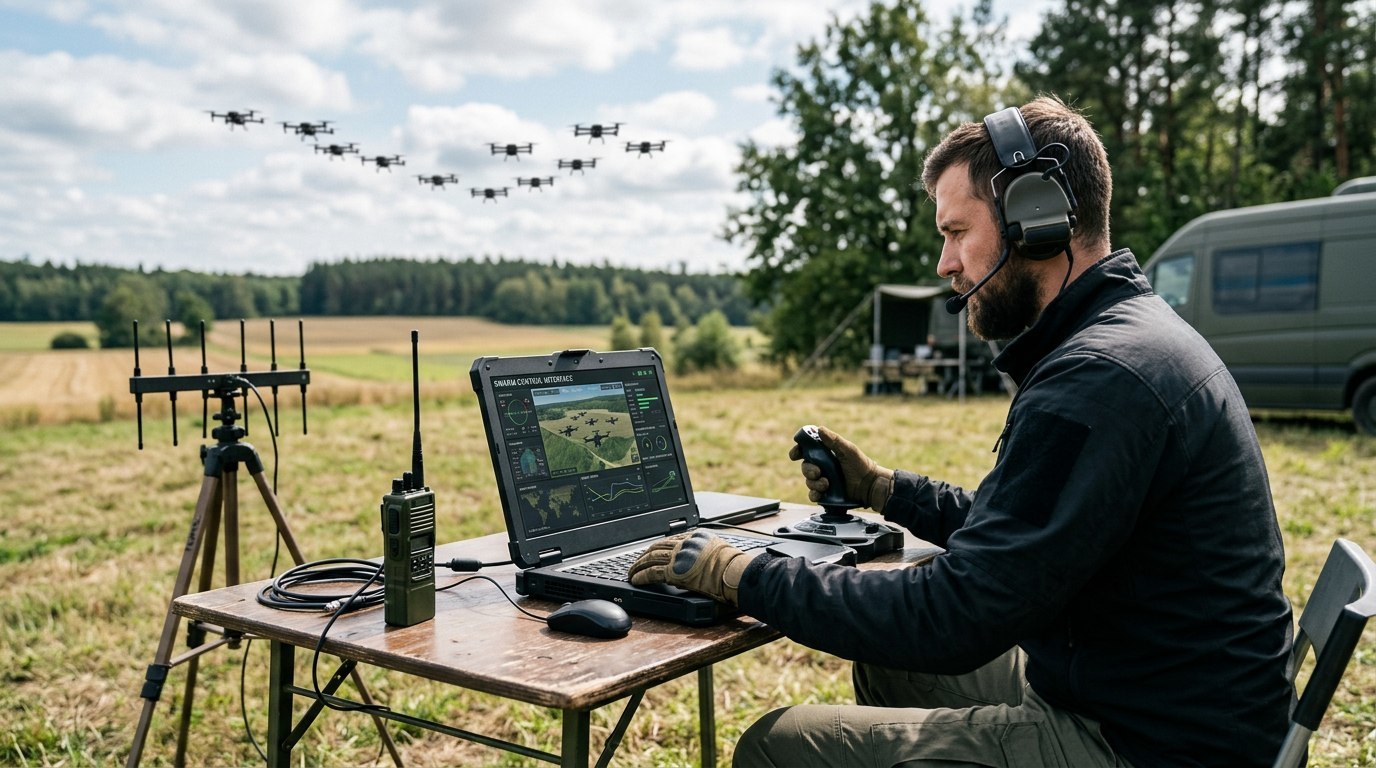
“It is necessary to accumulate an enormous amount of data to train neural networks: visual information and telemetry. This takes a huge amount of time. The same event filmed in the morning, afternoon, and evening represents completely different lighting conditions. That means different datasets are needed. Autumn, spring, summer — again, different conditions. Separate datasets are also required for night vision systems, thermal imaging, infrared, and multispectral imaging,” Kondratyev explained.
There Is Almost No Defense Against a Swarm
The race to develop drone swarm technologies is drawing in more and more countries. This year, Americans tested similar systems at a training ground in Germany. Comparable developments are underway in Russia as well, carried out by several teams simultaneously. China, Japan, South Korea, France, the United Kingdom, and Ukraine are also actively involved, says Dmitry Kornev, founder of the Military Russia portal:
“Imagine ten drones controlled by a single operator: he designates the target, while the drones attack the object from different directions according to a complex algorithm. Ideally, the strikes should also be synchronized in time. That is exactly what the software system ensures.”
Kornev sees the main danger of drone swarms in their ability to reliably destroy complex and heavily protected targets, such as surface-to-air missile systems. If drones attack one by one, the air defense system can shoot them down. But if the strike comes simultaneously from all directions, the probability of destroying the system becomes nearly absolute.
“At the current stage of technological development, effectively countering a drone swarm is almost impossible. That is why it is believed that whichever side first masters such systems will gain a major advantage on the battlefield,” Kornev explains.
He also does not rule out that limited tests of swarm technologies may already be taking place within military units.
Will the Wizard Arrive?
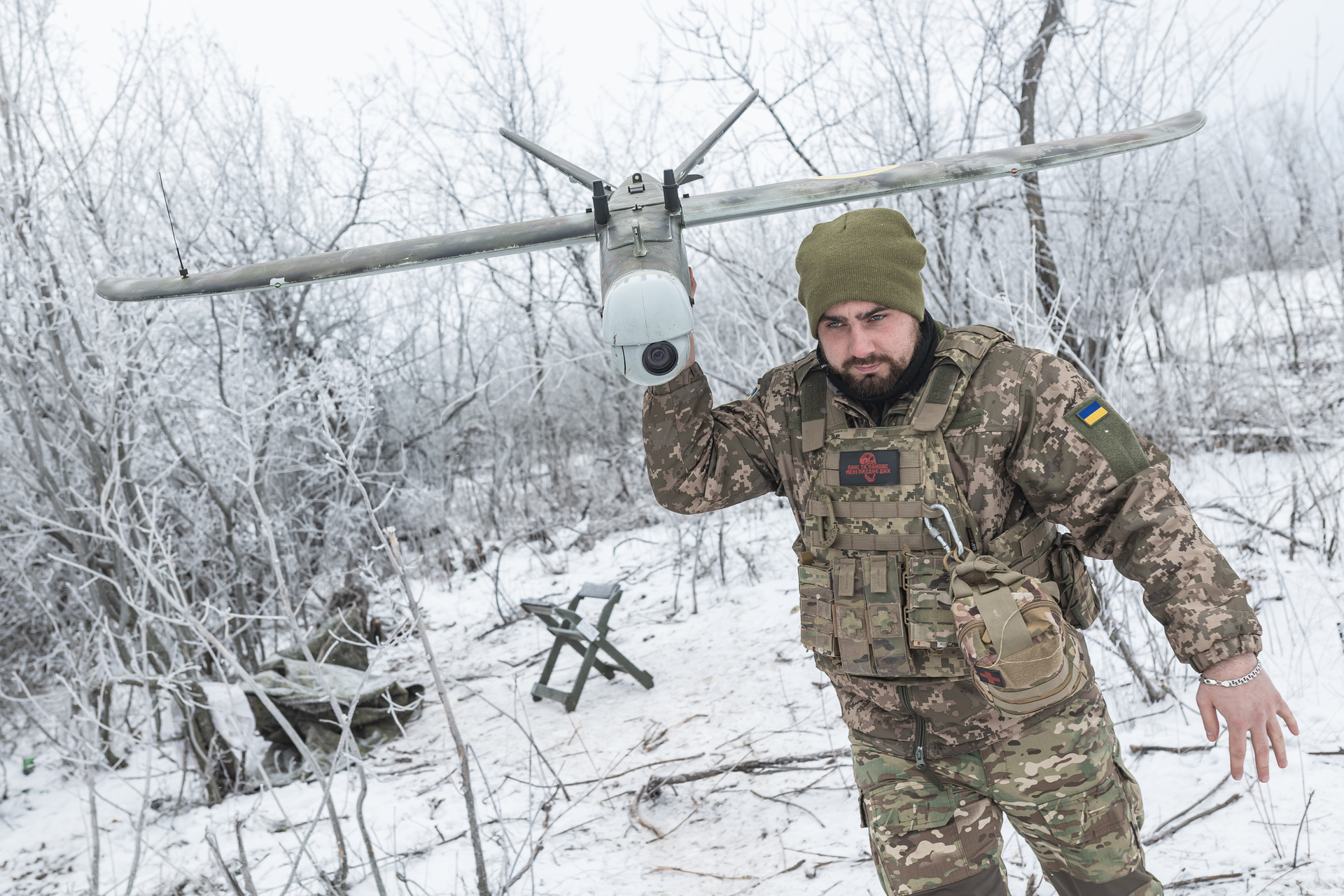
According to Maksim Kondratyev, in the global race for drone swarm technologies, Ukraine has primarily been assigned the role of a testing ground with access to active combat zones — and this is likely what attracted the Americans to the Swarmer project in the first place:
“They have no interest in the Ukrainian economy. What interests them is the testing ground and the technology: the ability to quickly gather an initial dataset and begin testing. If the technology works, it would be profitable for the Americans to take it, patent it in the United States, and then sell licenses and production rights. Everything necessary will simply be squeezed out of the Ukrainian company. A wizard in a stars-and-stripes helicopter exists only in fairy tales.”
Dmitry Kornev shares this view: “If the startup produces results, the solution tested in Ukraine could be brought to the United States and handed over to the Pentagon,” thereby bypassing competitors in the struggle for American military contracts related to drone management.
At the same time, experts also allow for the opposite scenario — that Ukrainian partners themselves could deceive Pentagon representatives and pocket the allocated funds. Dmitry Kornev notes that both genuinely competent companies and those simply seeking profit — including “all sorts of opportunists” — are rushing to the Ukrainian “experimental platform.”
“Considering the significant technological lag the United States has accumulated in the drone sector, Ukrainian specialists may simply be feeding Americans stories about nonexistent breakthroughs. And this could indeed turn out to be a massive scam. Then try finding the money afterward. They’ll just say: venture investments — it didn’t work out. Ciao-cacao,” Maksim Kondratyev concluded.